

Men’s Ring Width Guide: 6mm, 8mm and 10mm Bands

- What does ring width mean?
- What are the common widths?
- How do the widths compare?
- How does hand size affect width?
- How does finger length matter?
- What is a ring profile?
- What is comfort fit?
- How does width change ring size?
- Does the material change the width you want?
- What width for a wedding band?
- Can you stack rings?
- What mistakes should you avoid?
- Can you choose a width for a gift?
- What widths are popular right now?
- How do finishes change the look of a width?
- How do materials affect width?
- How do you measure the width of a ring you already own?
- What is the difference between size and width?
- How can you test a width at home?
- FAQ
- References & Sources
Ready to look? Browse all men’s wedding rings or the full range of men’s rings at Mens Rings Online.
What does ring width mean?
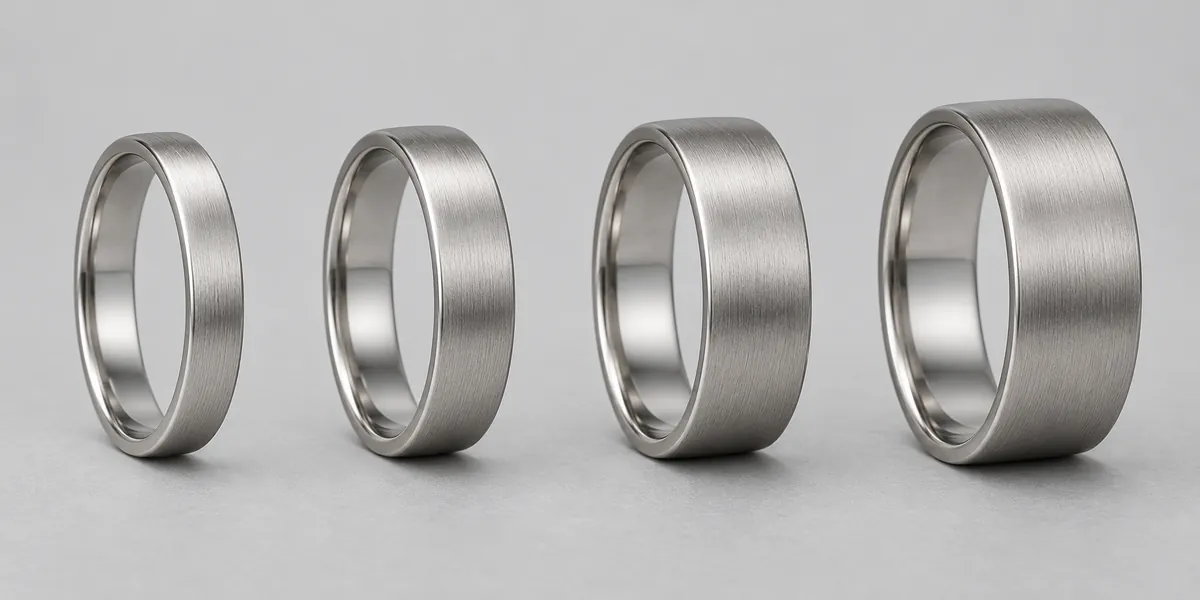
Ring width is how wide the band is across the finger, measured in millimeters from one edge to the other. It affects how the ring looks, how it feels and even how it fits. A wide band covers more of the finger and makes a bold statement. A narrow band looks refined and leaves more skin showing.
Width is separate from ring size, which is the inside circumference. Our men’s ring size chart explains how to measure size, and the ring size article on Wikipedia covers the standards used around the world.
What are the common widths?
Men’s rings usually fall between 4mm and 10mm, and each width has its own character.
- 4mm. Slim and understated, often chosen for a refined look.
- 6mm. The classic men’s width, balanced on most hands.
- 8mm. A bolder band that suits larger hands and confident style.
- 10mm. A broad statement band, popular for strong, wide hands.
How do the widths compare?
This table gives a quick guide.
| Width | Look | Best for |
|---|---|---|
| 4mm | Slim, refined | Smaller hands, minimal style |
| 6mm | Balanced, classic | Most hands, everyday wear |
| 8mm | Bold | Larger hands, statement style |
| 10mm | Broad | Large, wide hands |
How does hand size affect width?
As a rule of thumb, wider hands suit wider bands, and narrower hands suit slimmer bands. A 6mm band looks balanced on an average hand. If your hands are large, an 8mm band keeps the proportions in balance. If your hands are slim, a 4mm or 5mm band looks neat. These are guides rather than rules, and personal taste matters most.
How does finger length matter?
Longer fingers carry a wider band easily, and a broad ring makes them look strong. Shorter fingers look balanced with a medium band, and a very wide band can cover much of the finger. If you are unsure, start with 6mm, which suits most fingers, and move up or down by 2mm if you want a different look.
What is a ring profile?
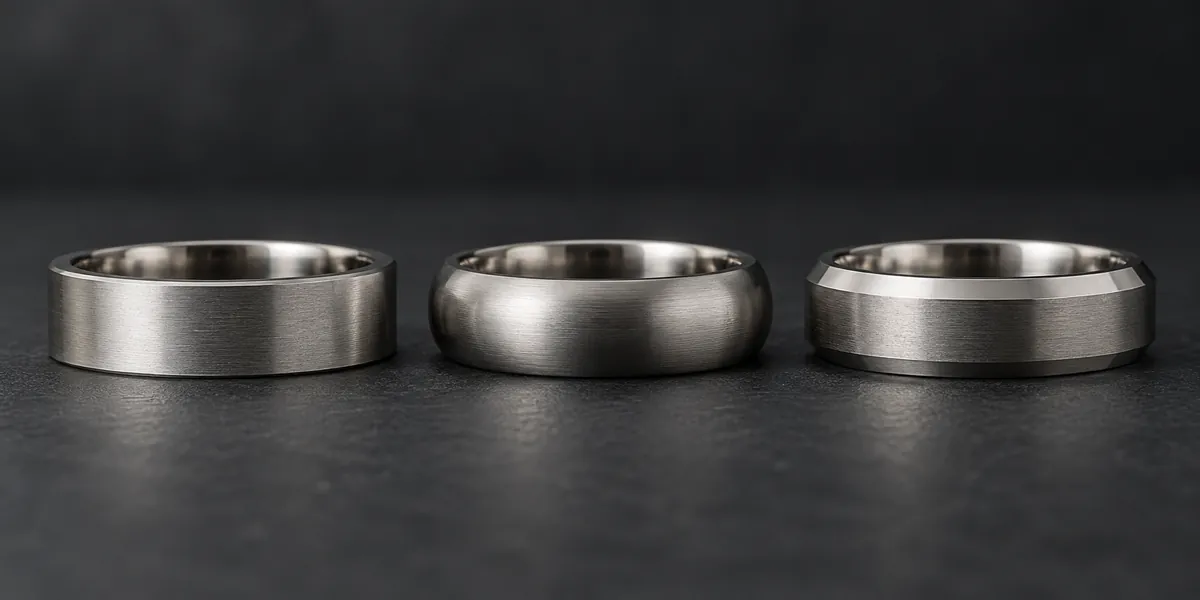
The profile is the shape of the ring when you look at it from the side. A flat profile has a straight outside edge and a modern look. A domed profile curves gently from edge to edge, which is the traditional shape. A beveled profile has angled edges that frame a flat center. Profile and width work together, so a beveled 8mm ring looks different from a flat 8mm ring.
What is comfort fit?
A comfort-fit ring has a gently rounded inside surface, so it slides over the knuckle and feels smooth against the skin. It matters most on wider bands, because a wide band touches more of the finger. Many of the rings at Mens Rings Online use a comfort-fit inside, and you can see the details on each product page.
How does width change ring size?
Wider bands tend to feel snugger than narrow bands in the same size, because more of the finger is covered. Many men find they prefer to go up a half size for a band of 8mm or more. Use the ring size chart and sizer to measure, and measure at the end of the day when your fingers are at their usual size.
Does the material change the width you want?
It can. Light materials such as titanium and ceramic suit wider bands comfortably, because the weight stays low. Dense materials such as tungsten feel substantial even in a medium band. See our guide to tungsten carbide versus titanium rings to compare how each feels, and the black rings for men guide to see the dark options.
What width for a wedding band?
The most common men’s wedding band widths are 6mm and 8mm. A 6mm band suits a groom who likes a classic, balanced look. An 8mm band suits a groom with larger hands or one who wants a statement. If your partner’s ring is slim, a 6mm band is a good match. Browse the men’s wedding rings to see widths side by side.
Can you stack rings?
Yes. Many men wear a wedding band with a second ring, such as a signet or a pinky ring. Choose bands of different widths so they look deliberate, and keep the finishes consistent. See the men’s signet rings and the pinky rings for companions.
What mistakes should you avoid?
The most common mistake is choosing a width without thinking about the size. A wide band in the wrong size feels tight, so measure carefully. Another is picking a very wide band for a small hand, which can overwhelm it. A third is forgetting the inside fit, because comfort fit matters more as the band gets wider. Test the width with paper first, and you will avoid all three.
Can you choose a width for a gift?
If you are buying for someone else, 6mm is the safest choice, because it suits most hands and most styles. Pair it with a comfort-fit inside and a finish that matches what he already wears. Use the ring size chart to confirm the size, and keep the details for later.
What widths are popular right now?
Six millimeters remains the most common width for men’s wedding bands, because it suits most hands. Eight millimeters has grown in popularity for men who like a bolder look, especially in materials such as titanium and tungsten. Slimmer bands of 4mm and 5mm have a following among men who prefer a quiet style or who wear a ring alongside others.
How do finishes change the look of a width?
A polished finish reflects more light, so a polished band looks a little wider than a matte band of the same size. A brushed or matte finish looks softer and more compact. Beveled edges make a wide band look more refined by framing the center. If you like a wide band but worry it will look heavy, choose a brushed finish with beveled edges.
How do materials affect width?
Materials change how a width feels. Titanium and ceramic stay light even at 8mm or 10mm. Tungsten feels substantial at any width. Silicone is soft and flexible, so a wider silicone band is easy to wear all day. Our guide to tungsten carbide versus titanium rings explains how the two compare, and the guide to rings for men who work with their hands explains how to match a ring to a job.
How do you measure the width of a ring you already own?
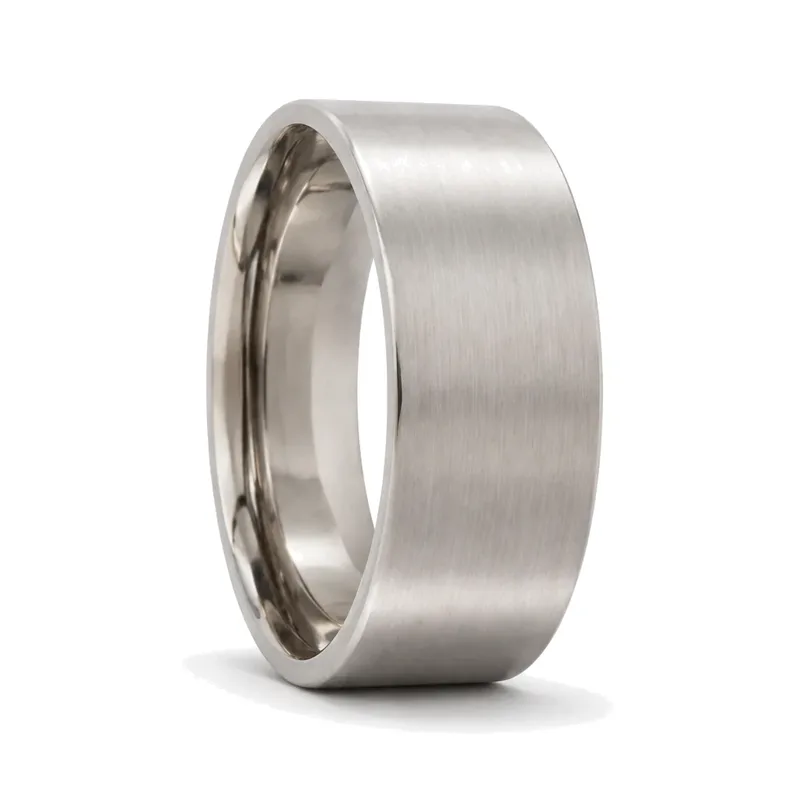
Lay the ring flat on a ruler and read the distance across the band in millimeters. If you have a ring you love, note the width and use it as a reference when you shop. Knowing that you like a 6mm or an 8mm band makes it much easier to choose a new ring with confidence, and the number is usually listed on each product page.
What is the difference between size and width?
Size is the inside circumference of the ring, which decides whether it fits your finger. Width is how wide the band is, which decides how it looks and feels. You can have two rings in the same size with very different widths. Always choose the size first, then the width, and use the ring size chart and sizer to be sure.
How can you test a width at home?
Cut a strip of paper to the width you are considering, wrap it around your finger and look at it in a mirror. Wear it for a few minutes and notice how it feels when you bend your finger. This simple test gives a good idea of how a band will look before you buy.
FAQ
What is the most popular men’s ring width?
6mm is the most popular. It is balanced on most hands, and 8mm is next for those who prefer a bolder look.
What ring width suits large hands?
8mm or 10mm bands keep the proportions in balance on large hands.
What ring width suits small hands?
4mm to 6mm bands look neat and balanced on smaller hands.
Does a wider ring fit tighter?
It often feels snugger, because more of the finger is covered. Many men go up a half size for 8mm or wider.
What is a comfort-fit ring?
A comfort-fit ring has a rounded inside surface that slides on easily and feels smooth against the skin.
What width is best for a wedding band?
6mm and 8mm are the most common. Choose by hand size and the look you want.
Ready to choose? Browse men’s wedding rings, men’s rings or the Mens Rings Online home page.